
Evacuation
In exceptional situations, it may be necessary to temporarily leave your home, for example in the event of a fire, flood, chemical incident or other emergency. On this page, you will find clear information about when and how to evacuate, what to take with you, and where to go.
By being well prepared, you will not only help yourself, but also others around you.

Evacuation?
In an emergency situation, it may be necessary to move people and animals out of a specific area. There are two types of evacuation: reflex evacuation and preventive evacuation.
Reflex Evacuation
This is an immediate evacuation in response to acute danger, for example in the event of a chemical leak or a nearby fire. The aim is to bring everyone to safety as quickly as possible. Because the danger arises suddenly, there is no time for preparation. People and animals are taken to a reception centre opened by the authorities.
Preventive Evacuation
This takes place when there is a threatening danger, but it is not yet immediately acute. This allows more time to prepare properly. People and animals are moved in advance to a safe location. If possible, you should stay with family or friends outside the affected area. If that is not possible, you can go to the reception centre.
During an evacuation, the affected area is divided into different zones. These zones may change depending on the situation.
Evacuation Zone
This is the area you must leave. This may be due to a reflex or preventive evacuation. No people are allowed to remain within this zone.
Warning Zone
This zone surrounds the evacuation zone. The danger is not yet immediate, but you are warned and given instructions to be prepared. Tips for residents in this zone:
-
Make a plan to evacuate if it becomes necessary.
-
Keep roads clear for emergency services.
-
Follow official information via news media or government communications.
-
Check whether neighbours or people in need of assistance are safe.
Preventive Zone
This area lies just outside the warning zone. At that moment, there is no direct threat yet. You will receive information about the incident and be asked to remain vigilant. Advice is the same as in the warning zone: keep roads clear, follow official information, and check on neighbours.

FAQ
Never evacuate on your own initiative; wait for the order from the emergency services.
You can go to:
Your family or friends who are not in the affected area. Speak to them in advance to inform them and make sure they agree.
A reception centre may be set up. Emergency services on site will provide you with the necessary information and keep you updated on developments.
Always follow official channels.
It is difficult to predict in advance how long you will have to stay away from your home. As soon as the situation is safe again, the return will be organized. This may be after a few hours, but it could also take several days.
Your ID card and those of your children
Personal belongings for you and all your family members to spend at least one night with friends or in a reception centre
Medications
Mobile phone, charger, and possibly a laptop
If you have young children, don’t forget bottles, milk, diapers… as well as toys to keep them occupied
Pets are allowed in the reception centre. Bring your pet’s passport, a crate, some food, and any medication.
If your pet cannot be evacuated, provide enough food and water for 24 hours. If the evacuation measure needs to be extended, the authorities will give further instructions.
Do not leave any electrical appliances on: coffee maker, iron… The fridge and freezer may remain on. Don’t forget to lock doors and windows.
If you have an alarm, switch it on. During the evacuation, appropriate safety measures will be taken in the evacuated areas.
If you are in a reception centre, the contact person on site will provide this information. If you are with family or friends, you can find all information on:
- Website: crisis-limburg.be
- Facebook: Noodplanning en Crisisbeheer Limburg
What you need to know
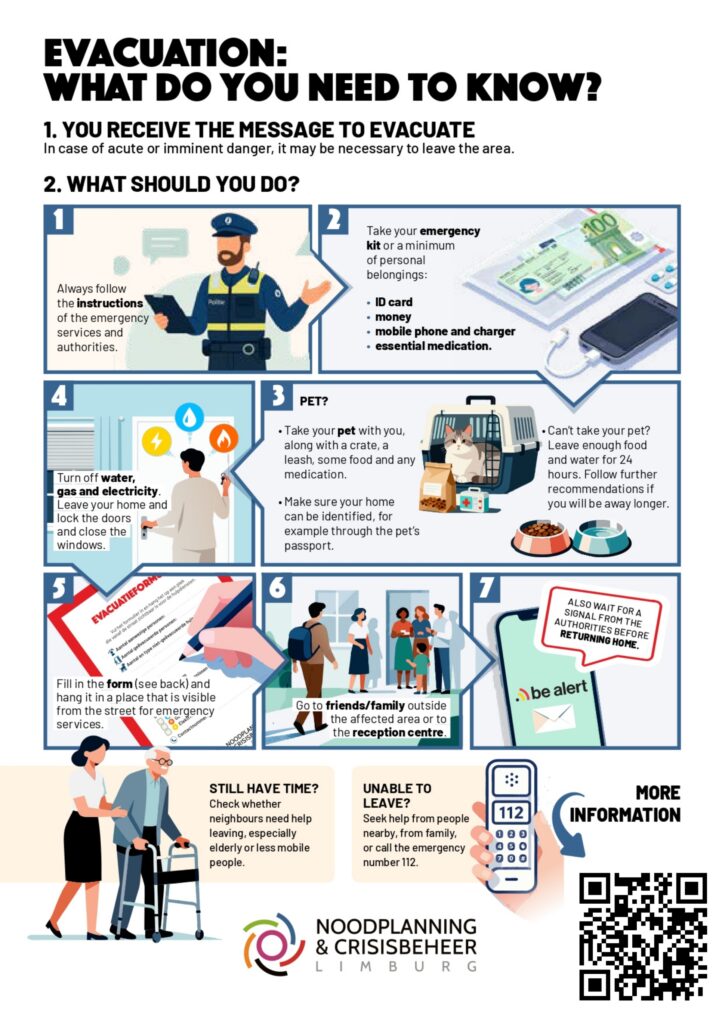
The infographic explains what you need to do when you receive the message to evacuate.
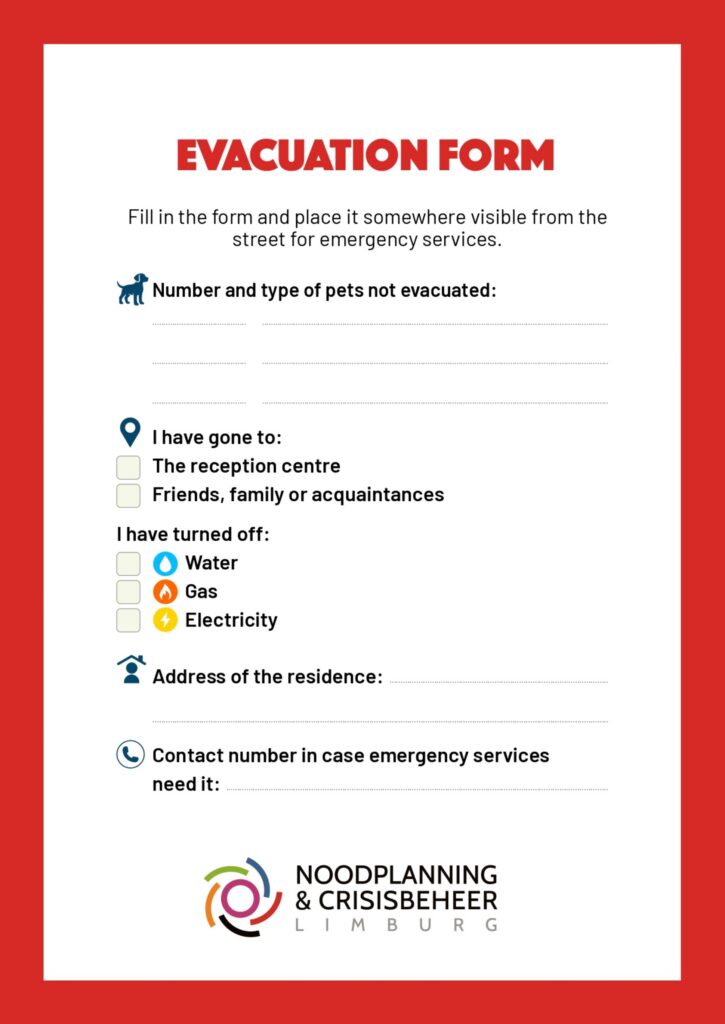
You will also find the evacuation form here. This form should be completed before leaving your home and displayed in a place that is visible from the street. It provides essential information to the emergency services.
Download the infographic here.